
Paver Maintenance
How to Clean Pavers in Florida: A 7-Step Guide for Homeowners
Quick answer: To clean pavers in Florida, sweep the surface, pre-treat mold and algae with a mild cleaner, scrub the joints, rinse from the high side down, and let everything dry before sealing. Most homeowners can clean pavers with soap, water, and a stiff brush. Deep black staining, a full driveway, or joints that have already lost sand are where a professional visit pays for itself.
Introduction
Florida does not go easy on outdoor surfaces. Between daily summer downpours, salt in the coastal air, irrigation spray, and shade that never fully dries, a paver patio can go from crisp to green in a single rainy season. The good news is that pavers are the easiest hardscape surface to bring back, because every unit can be treated, lifted, or replaced on its own.
We are FJT Pavers Corp, a hardscaping team based in Pinellas Park and working across Tampa Bay: St. Petersburg, Clearwater, Largo, Brandon, Bradenton, Sarasota, Lakeland, and Wesley Chapel. What follows is the same order of steps we use when we clean pavers on a real job, plus the three mistakes we see homeowners make most often.
What does it mean to clean pavers?
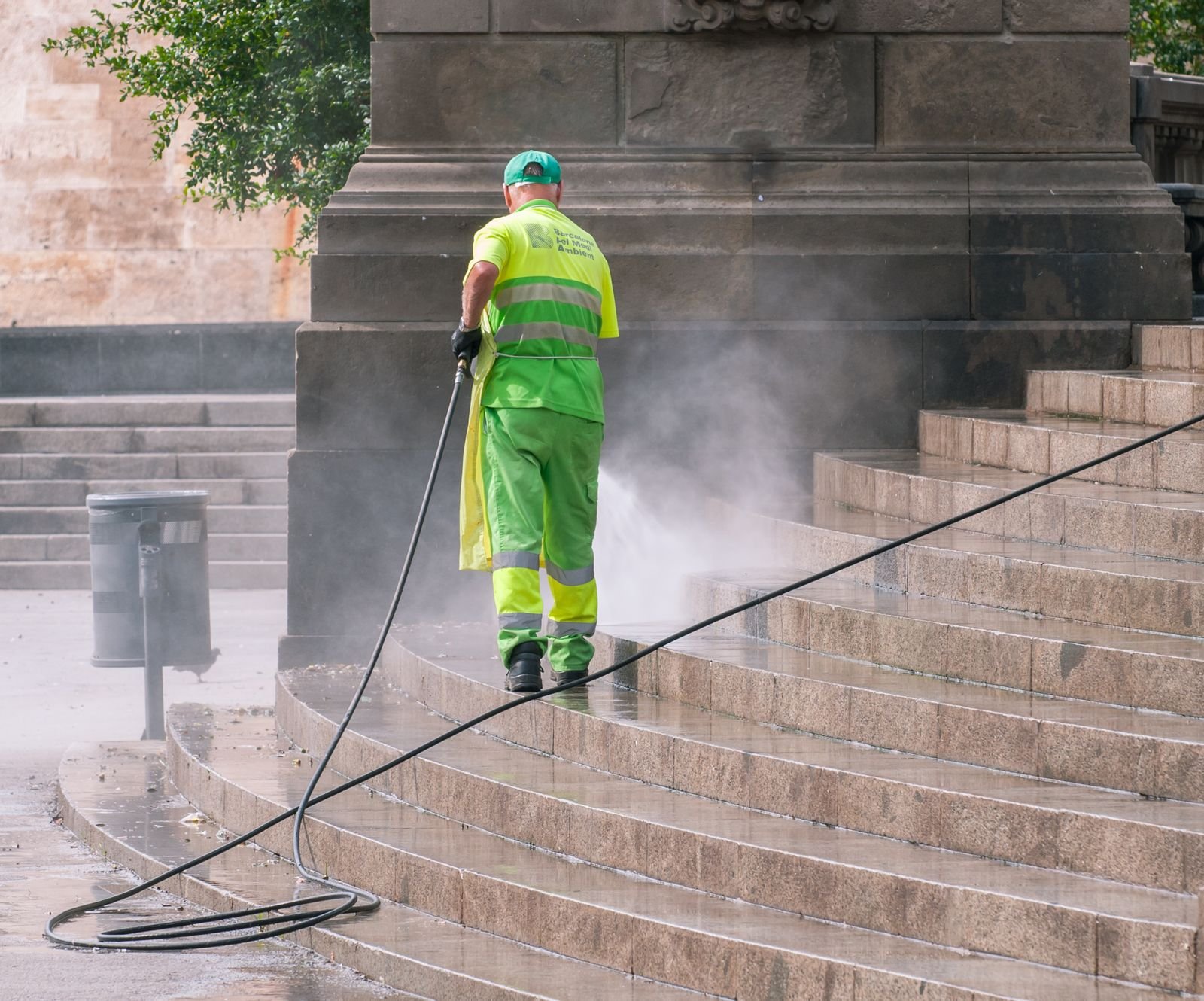
To clean pavers is to remove the organic growth, dirt, and stains sitting on the paver surface and inside the joints, without washing out the joint sand that holds the whole system together. That last part is what separates a proper cleaning from an expensive mistake, and it is the reason a careless afternoon with a pressure washer can cost more than hiring someone.
A Florida paver surface usually carries four problems at once, and each responds to something different:
- Surface dirt and dust — sand, pollen, and traffic grime that rinse off with water alone.
- Organic growth — mold, mildew, and algae, concentrated wherever the surface stays damp and shaded.
- Stains — rust from irrigation water, oil on a driveway, leaf tannin, and barbecue grease.
- Efflorescence — a chalky white haze that rises from inside the paver itself, and is not dirt at all.
Knowing which of the four you are looking at decides your method. Scrubbing efflorescence, for example, gets you nowhere: it needs a specific efflorescence remover, or patience, because it usually fades on its own within the first year.
Why do Florida pavers get dirty so fast?
Pavers here get dirty faster than almost anywhere in the country because the climate keeps the surface damp most of the year. Mold and algae do not need dirt to grow, they need moisture and shade, and Tampa Bay supplies both generously from June through September.
The usual accelerators, in the order we see them on jobs:
- Afternoon storms and high humidity that never let the surface dry completely.
- Shade from oaks, screen enclosures, and north-facing walls, where sun never reaches to dry things out.
- Irrigation heads pointed at the hardscape, the single most common cause of black staining and rust lines on a paver driveway.
- Salt air near the coast, which leaves a residue that holds moisture.
- Leaf litter left sitting, which becomes a tannin stain and a mold starter culture at the same time.
Is that black stain mold or efflorescence? Wet a corner of it with plain water. Mold and algae darken and stay dark. Efflorescence is a white or gray chalky film that disappears while wet and returns as the surface dries. It is a ten-second test worth doing before you buy any product.
How to clean pavers step by step
Here is the seven-step order we follow. Do them in sequence, because each step protects the one after it.
- Clear and sweep the surface. Move furniture, planters, and the grill. Sweep with a stiff push broom to lift loose sand and organic debris out of the joints.
- Pull weeds and moss by hand first. Pulling before wetting keeps roots from snapping off inside the joints, where they simply grow back.
- Protect what sits next to the pavers. Soak nearby grass and beds with plain water and cover delicate plants. Whatever cleaner you use will run off the edge.
- Pre-treat the growth. Apply the cleaner and let it dwell ten to fifteen minutes. Never let it dry on the surface; mist it again if the sun is strong.
- Scrub the joints and the stains. A stiff-bristle deck brush does most of the real work. Work in sections of about ten square feet so nothing dries before the rinse.
- Rinse from the high side down. Always rinse in one direction, top to bottom, so dirty water never runs back across a section you already finished.
- Let it dry, then top off the joint sand. Give it a full 24 to 48 hours. Refill any joints that lost sand, sweep it in, and mist lightly to settle it.
Skipping step seven is the mistake that shows up six months later. Joint sand is structural: it locks the units against each other so the surface carries weight as one piece. Every time you clean pavers you take a little of it out, and it has to go back.
Can you clean pavers without a pressure washer?
Yes, and for a patio-sized area it is often the better choice. How to clean patio pavers without removing sand is one of the most searched questions on this topic, and the honest answer is that a bucket, a stiff brush, and the right cleaner handle most residential mold and algae. It takes longer and it protects your joints.
The no-machine method:
- Mix warm water with a few drops of dish soap, or an oxygen-based cleaner for organic growth.
- Wet the section first, so the cleaner sits on the surface instead of soaking straight into the paver.
- Scrub with a deck brush, joint by joint, in small sections.
- Rinse with a garden hose on a jet nozzle, high side to low side.
Where the manual method runs out: a full driveway, years of embedded black growth, or oil that has soaked into the paver body. At that point the labor of doing it by hand overtakes the cost of a professional visit.
What is the best cleaner to clean pavers and remove mold?
For most Florida surfaces, an oxygen-based (sodium percarbonate) cleaner is the best way to clean pavers covered in mold, because it kills organic growth without bleaching the color out of the stone or burning the plants around it. Chlorine bleach works faster and is harder on everything nearby.
| Method | Best for | Main risk | Safe on travertine? | Effort |
|---|---|---|---|---|
| Soap and water | Light dirt, routine upkeep | Almost none | Yes | Low |
| Oxygen cleaner | Mold, mildew, algae | Needs dwell time | Yes | Medium |
| Diluted bleach | Heavy black growth | Kills plants, can lighten color | Risky | Medium |
| White vinegar | Small light stains | Etches natural stone | No | Medium |
| Muriatic acid | Almost nothing residential | Burns skin, whitens surface | No | High |
| Pressure washing | Driveways, large areas | Blows out joint sand | With care | Low |
Two products deserve a warning. How to clean paving with vinegar gets searched constantly, and vinegar does work on light stains on concrete pavers. But vinegar is an acid, and travertine and other limestone pavers are calcium carbonate. The acid dissolves the surface and leaves a dull etched patch that no amount of scrubbing brings back. Muriatic acid is worse on every count and has no place in a residential job.
Can you mix cleaners to work faster? No, and this rule has no exceptions. Never combine bleach with vinegar, ammonia, or an acid cleaner. The reaction releases chlorine gas, which is dangerous in a screened patio or enclosure. Use one product, rinse completely, and only then consider another. The EPA’s guidance on cleaning up mold applies the same principle to indoor surfaces.
Does power washing damage pavers?
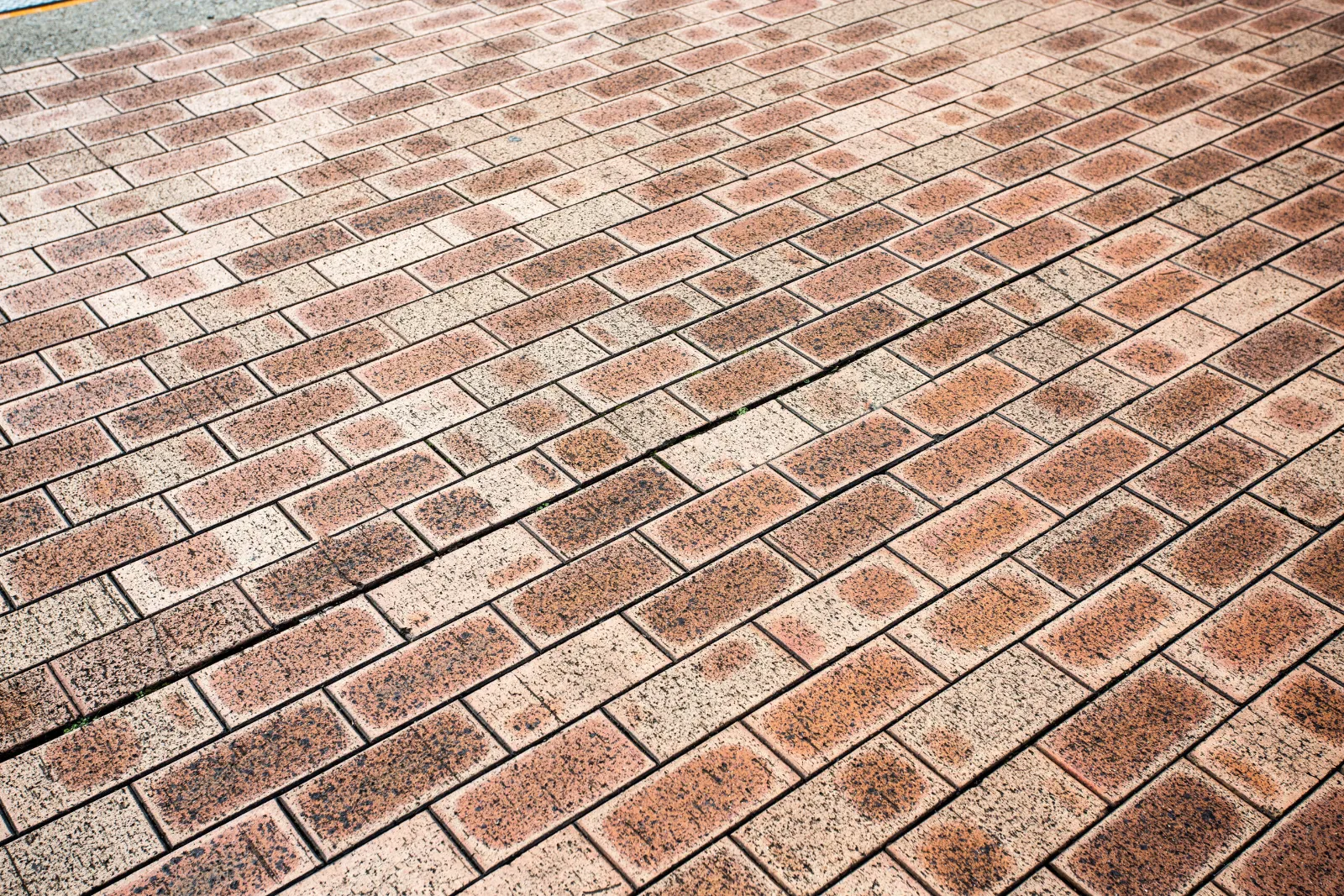
Power washing does not damage pavers when the pressure and the tip are right, and does real damage when they are not. The paver itself is dense concrete or stone and takes a lot. The joint sand between the units is what a narrow high-pressure tip strips out in seconds.
Practical settings for how to clean pavers with power washing:
- Use a wide-angle tip, 25 or 40 degrees, never the zero-degree red one.
- Keep the wand 8 to 12 inches off the surface and always moving.
- Work at moderate pressure and test a hidden corner before the visible area.
- Sweep along the joints, never straight down into them.
- Plan to re-sand every joint afterward. Assume it; do not hope you got away with it.
This is why so many DIY jobs look fantastic for a month and then start to shift. The surface came clean, the sand left with the dirt, and nothing went back in. If your pavers already rock or sit unevenly, the fix is paver repair in Tampa, not more washing.
For a driveway, a full pool deck, or any weekend you would rather keep, our pressure washing in Tampa service does the cleaning and the re-sanding as one job.
How often should you clean pavers in Florida?
Most Tampa Bay homeowners should clean pavers thoroughly once a year, with a quick rinse every couple of months in between. Shaded and poolside surfaces need it more often than a sunny driveway, because they stay wet longer.
| Surface | Deep cleaning | Why |
|---|---|---|
| Driveway (full sun) | Once a year | Sun suppresses growth; oil and rust are the real issues |
| Patio (partial shade) | Once or twice a year | Mold returns fastest in filtered shade |
| Pool deck | Twice a year | Constant splash-out plus chemical residue |
| Shaded walkway | Twice a year | Slippery algae becomes a safety problem |
| Before sealing | Always | Sealing over dirt locks it in permanently |
A pool deck is its own case, because a slick surface next to water is a safety issue and not just a cosmetic one. We covered the material side of that in our guide to pool deck pavers in Tampa Bay.
Does frequent cleaning shorten the life of pavers? No. Cleaning removes the organic growth that traps moisture against the surface and works into the joints. Left alone, that growth does more long-term harm than any cleaning does, which is part of why pavers outlast a slab here, as we compared in pavers vs. concrete in Florida.
Should you clean pavers before sealing?
Always. You have to clean pavers before sealing, and the surface must be completely dry when the sealer goes on. Sealing over dirt, mold spores, or damp joints traps all of it under a permanent film, and the only correction is stripping the sealer off and starting over.
The sequence that works: clean, dry for a full 24 to 48 hours of dry weather, replace the joint sand, then seal. Our walkthrough of that second half is in how to seal pavers in Florida, and if you would rather have it done in one visit, we pair the cleaning with paver sealing in Tampa.
How long should you wait after rain? At least 24 hours of dry weather, and 48 after a heavy storm. Pavers are porous and hold water below the surface long after the top looks dry. Sealing over trapped moisture is what produces the cloudy white haze people blame on a bad sealer.
When is it time to hire a pro to clean pavers?
Call a professional when the growth has been there more than a season, when the area is large enough that a machine is the only realistic option, or when the surface has already lost sand and started to move. The Concrete Masonry & Hardscapes Association is consistent on the point that a paver system performs as designed only while its joints stay full.
Signs it is past the DIY stage:
- Black growth that returns within weeks of every cleaning.
- Pavers that rock, sink, or feel uneven underfoot.
- Joints visibly empty, or full of weeds along their whole length.
- Oil or rust that has soaked into the paver body instead of sitting on top.
- A driveway or pool deck big enough that doing it by hand would take the whole weekend.
A professional visit is not only faster. The re-sanding, the correct pressure, and the option to seal immediately afterward are what make the result last, instead of buying a clean surface until the next rainy season. If you are still deciding what to install in the first place, our complete guide to pavers in Tampa Bay covers types, cost, and installation.
Frequently asked questions
What is the best way to clean pavers?
The best way to clean pavers for most homeowners is an oxygen-based cleaner with a stiff deck brush, rinsed from the high side down. It removes mold and algae without bleaching the color or stripping the joint sand the way a narrow pressure tip does.
How do you clean pavers without a pressure washer?
Wet the section, apply dish soap in warm water or an oxygen cleaner, let it dwell ten to fifteen minutes, scrub with a deck brush, and rinse with a garden hose. It is slower than a machine and much safer for the joint sand.
Can you clean pavers with vinegar?
You can use vinegar on concrete pavers with light stains, but never on travertine, marble, or other natural stone. Vinegar is acidic and etches limestone-based pavers, leaving a dull patch that cannot be polished out.
Can you clean pavers with bleach?
Diluted bleach kills heavy black growth quickly, but it can lighten the paver color and it kills nearby grass and plants. If you use it, soak the surrounding landscaping first, rinse thoroughly, and never mix it with vinegar, ammonia, or any acid cleaner.
How do you clean patio pavers without removing the sand?
Skip the pressure washer and scrub by hand, or use a wide 40-degree tip held a foot away and swept along the joints rather than into them. Even then, check the joints afterward and top off any sand that came out.
Why are my pavers turning black?
Black on pavers is almost always mold, mildew, or algae feeding on constant moisture in shade. Less often it is leaf tannin or an oil stain. Wet the area: organic growth stays dark when wet, while chalky efflorescence disappears and returns as it dries.
How often should you clean pavers?
Deep clean once a year for a sunny driveway and twice a year for a shaded patio or pool deck in Tampa Bay, with a rinse every couple of months in between. Always clean immediately before sealing.
How do you clean travertine pavers around a pool?
Use pH-neutral or oxygen-based cleaners only, and keep acids and vinegar away from travertine entirely. Rinse well so pool chemicals and cleaner residue do not sit on the stone, and re-seal on schedule to slow staining.
Conclusion
Pavers in Florida get dirty faster than almost anywhere, and they also come back more easily than any other hardscape surface. Sweep, pre-treat the growth, scrub the joints, rinse downhill, and put the sand back. That order handles the great majority of residential jobs. Match the product to the paver you actually have, keep vinegar away from travertine, and never mix cleaners.
When the growth keeps returning, when the surface has started to move, or when you would rather not spend the weekend on it, that is the moment to call a local crew that will clean pavers, re-sand the joints, and seal the surface in one visit.
Get your free estimate:
- Call or text: (727) 906-5614
- Email: joedoe2343@gmail.com
- Serving Tampa Bay: Pinellas Park, St. Petersburg, Clearwater, Largo, Tampa, Brandon, Bradenton, Sarasota, Lakeland, and Wesley Chapel
- Hours: Monday to Friday, 8am to 5pm · Saturday, 8am to 12pm
Ready to start your project?
Get a free, no-pressure estimate from a licensed, insured, local team serving all of Tampa Bay.